
Make Spritz Great Again
A too-trendy cocktail needs reimagining

To understand the spritz— and how it needs to be blown up and reinvented— understand its simple origins in Northern Italy (No, he wrote snarkily, it was not invented on Instagram, and it has nothing to do with Rome, Florence or the Amalfi Coast.)
The spritz’s humble origins started in the first half of the 19th century under Austrian rule when the occupiers found Italian wines too strong and would ask local bartenders in German to “spritzen” their vino with a bit of fresh water.
Ask for a Spritz Bianco in Northern Italy today and you’ll get a wine glass containing chilled white wine (typically Pinot Grigio), half its volume in soda water, a few ice cubes and a lemon slice. It’s much simpler and tastes cleaner and more refreshing than today’s trendy spritzes as bright as Dolce & Gabbana windows.
“I always drink a Spritz Bianco especially in summer,” says Count Brandino Brandolini, of Vistorta, his historic, organic wine estate in Friuli. “It makes the wine easier to drink with less alcohol.”
Nothing complicated there folks.
From its humble beginnings, the spritz was taken over by the Prosecco juggernaut with the cloyingly sweet, Aperol spritz concocted in the 1950s. and fresher, more sophisticated versions like the elderflower-flavored Hugo spritz (from Italy’s South Tyrol in 2005).
They’ve conquered the world and moved millions of cases of cheap Prosecco. But we can and should do a lot better.
When we travel through a varied country like Italy where great wines can be found in each region, why would we drink the same Prosecco cocktail everywhere? It’s about as uninteresting as zombie-ordering burrata wherever you find yourself.
Bars are only too happy to play along and sell tourists what they want — all the way down to Sicily.
In Southern Italy, there’s a long but unpublicized tradition of adding ice, soda and/or water (not to mention apricot or peach slices) to everyday wine in hot months.
But wine people generally treat such things as blasphemy. As a result, few regional winemakers and bartenders are working on original wine-cocktail recipes to help quench thirsts and promote their wines to new generations.
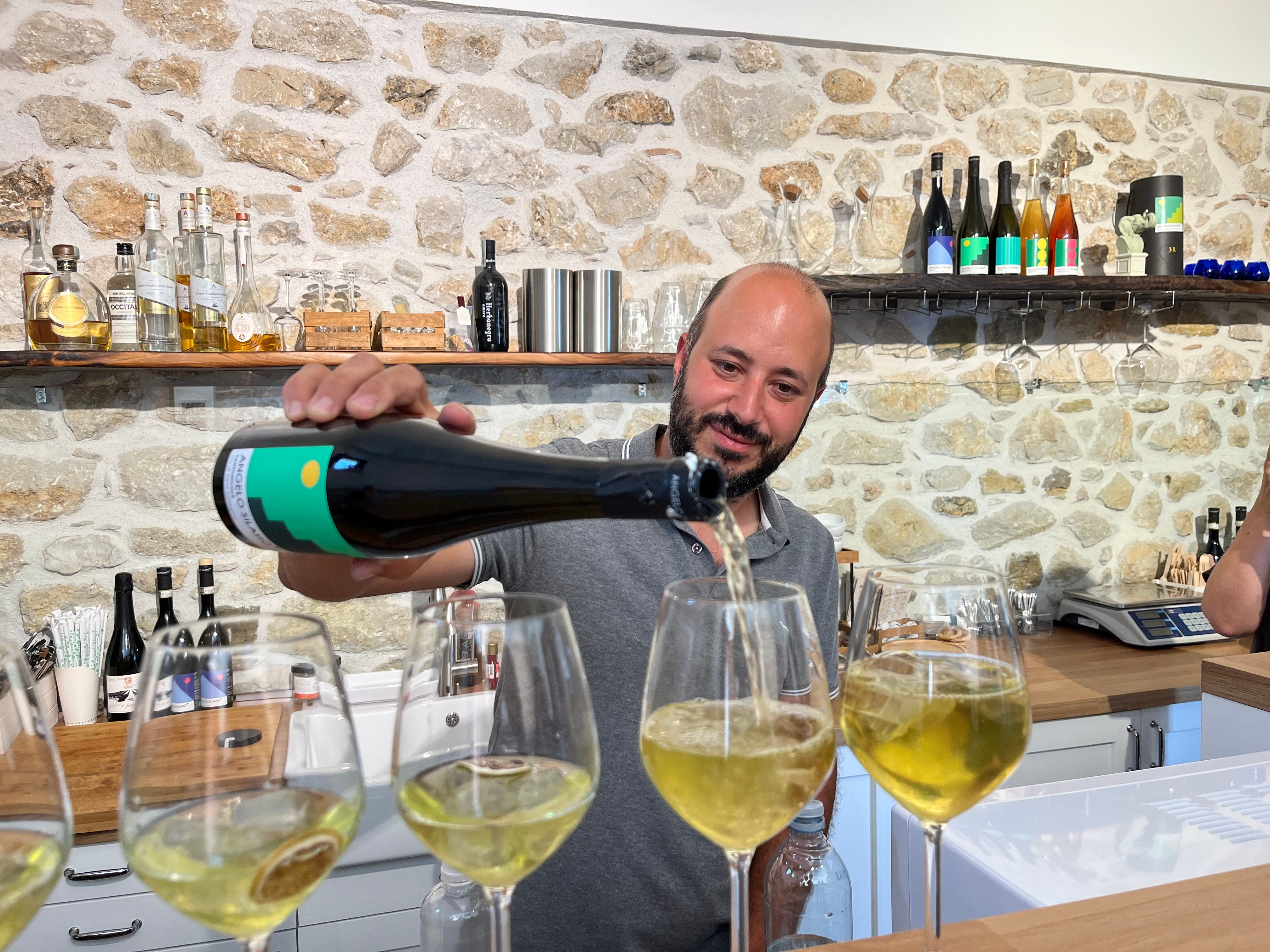
Angelo Silano is one of those exceptions who deserves attention.
Silano, 41, is an agronomist and enologist who worked in northern Italy and Beaujolais before returning home to his native Irpinia region of Campania to launch a tiny organic estate with his wife, Rosy, in 2010.
As the young couple began to produce their wines—including white single-vineyard Fiano bottlings and a classic-method Fiano sparkler—they had the clever idea of bringing a salumi-and-wine truck to the center of their village of Lapio (pop. 1,000) on weekend evenings.
The truck was a hit, and they now have a weekend aperitivo bar with a patio at their small, tidy winery on the edge of town. Back in the truck days, Silano listened to his customers and had a lightbulb moment. “The young people here would come and say, ‘I don’t like wine. I like cocktails.’ And they would ask for Campari or an Aperol Spritz.”
At one point, he recalls saying, “We are in Lapio. We need cocktails made with Fiano.”
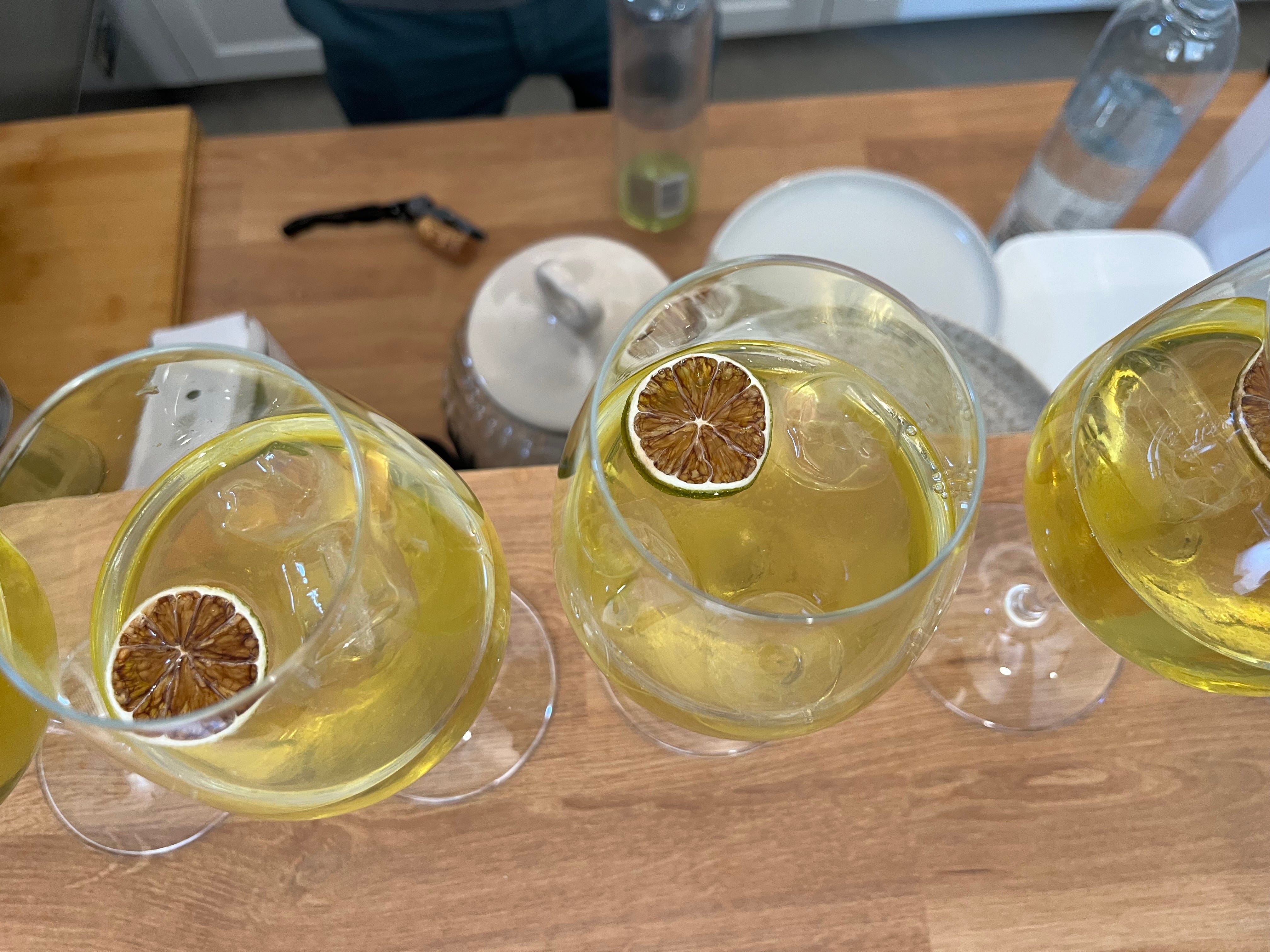
So he invented his iced Fiano “Aperispritz,” made with Fiano wine, Fiano grape juice, a splash of red organic ginger ale and a pinch of cane sugar. Other cocktails followed, like his “Fiano lime” (substituting lime juice for the ginger ale) and “Irpinia Mule” (with ginger beer).
“Now we see the young people who started with cocktails, they drink Fiano,” he says, adding that the tilt to unadulterated wine starts at about age 25.
With each new Fiano cocktail, Silano used the strengths of the wine—vibrant acidity and the complex set of aromas of young Fiano—to craft balanced cocktails. “This was a way for them to appreciate wine and to learn to drink well,” he says.
This is the kind of experimentation and discover we need more of. I’m not talking about saving wine here. I’m talking about saving ourselves. Experiment, discover, shake or pour over ice. Repeat.
