
The Amarone Question
From tradition to colossus to a big “beautiful mess”

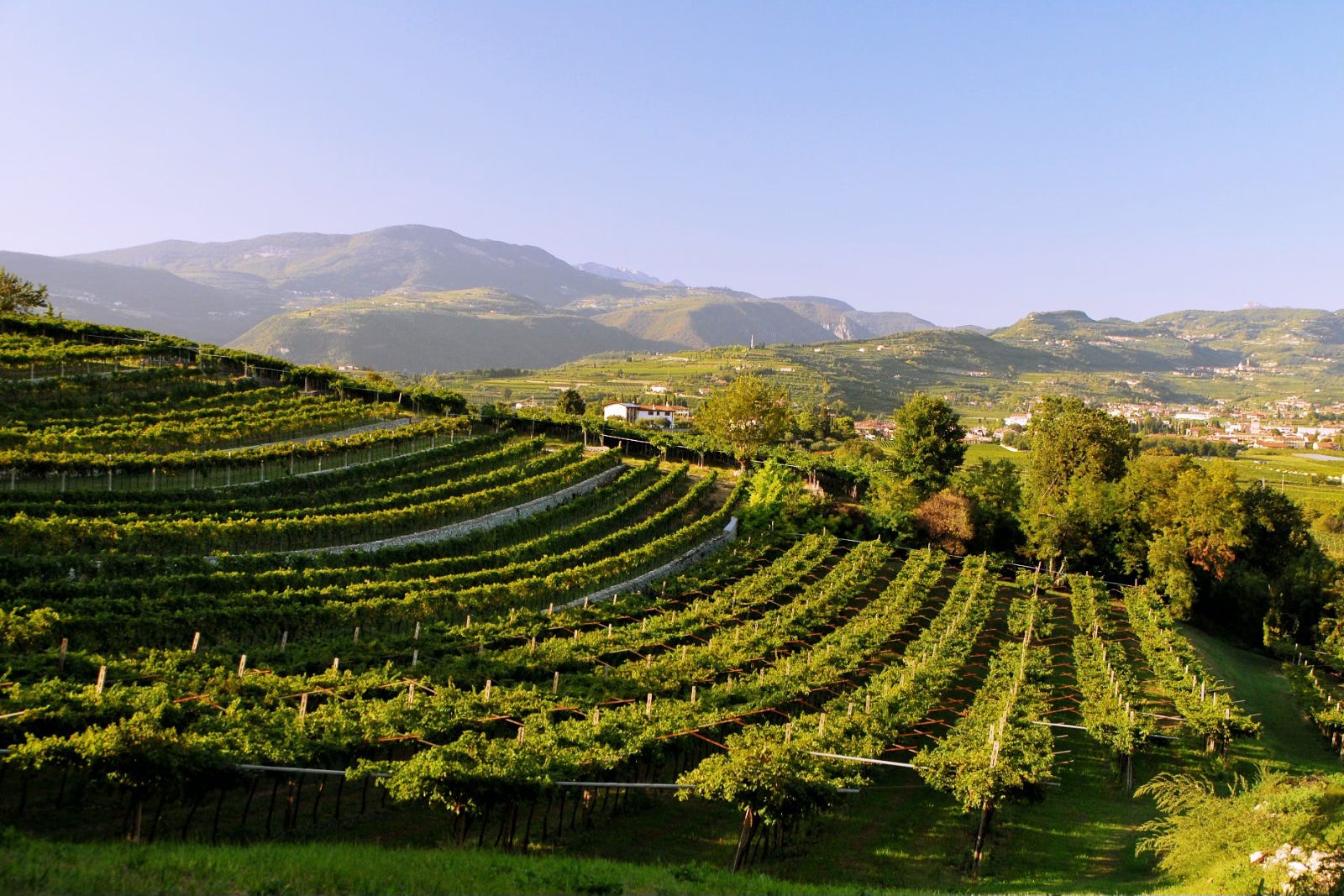
In the last decade or so, much of the western world has been moving to wines that are fresher and more nimble-- less ripe and alcoholic.
It’s hit my backyard in Verona with an existential dilemma: What about Amarone? What do you with a vinous colossus nowadays?
Amarone-land—spread over five valleys of Valpolicella north of Verona-- is in very lively tumult these days fueled by a drop in sales. In its quest to define itself, Amarone’s extremes range from wines with the color and heft of tractor oil to new examples so thin and lithe they could fit in ballet slippers.
What makes it so interesting is not mere stylistic differences but how the extremes intertwine with history, viticulture and climate change. From a winelovers’ perspective it’s something of a beautiful mess.
The wine experimentation that resulted in Amarone began between World Wars here and was spawned by a couple of factors.
First, the decline of Italian silk worm cultivation suddenly left farmers with large empty attics that could be repurposed for “resting the grapes” after harvest in an ancient process known as appassimento. Drying was already used by most familial growers for their sweet, special-occasion Recioto wine. It’s a ritual for which the Valpo consortium is seeking UNESCO classification as an “intangible cultural heritage of humanity” right up there with Italian cooking itself.
One legend claims Amarone was born in a local cooperative in the 1930s when a barrel of forgotten Recioto was mistakenly left to ferment to dryness, though I’m not sure I buy that.
The second factor that fed the experimentation was a matter of taste. Local grapes Corvina, Corvinone and Rondinella grown in tall tree-like pergola vines produced good acidity and sour cherry flavors but sometimes had trouble achieving what we’d today consider ripeness. In other words, they were well served by spending months “resting” in the cold lofts where bunches could continue to ripen and mellow, taking on the complexity of dried fruit.
Amarone (literally the big bitter one) was born commercially in the 1950s with producers like Bertani and Giuseppe Quintarelli long aging their wines in large barrels. While Bertani built its reputation as a fine wine producer, Quintarelli became a cult legend – a craftsmen whose wines were ranked among Italy’s best for their elegance and eloquence.
The 1980s began a conversion of vineyards to short-pruned vineyards with reduced yields and riper fruit. The second Valpolicella legend born in that period was Quintarelli’s protégée Romano Dal Forno, who set off in his eastern corner of Valpolicella to make dense, modern wines aged in French barriques.
Amarone became a wine known for weighty potential. As a cultural marker, in author Thomas Harris’s Silence of the Lambs novel (1988) the cannibalistic villain Hannibal Lecter describes having eaten a census takers’ liver “with some fava beans and a big Amarone.” The pairing was later altered in the 1991 film with Anthony Hopkins to “nice Chianti,” perhaps because Amarone was deemed too obscure at the time.
But in the new century, Amarone boomed. With a series of good vintages, Dal Forno became a darling of American wine critics and prices shot up to more than $500 a bottle. Riper fruit, aging in new smaller French barriques and hotter growing seasons led to a new dominant style with alcohol levels that climbed from15 percent to above 17 percent.
It is a love-it-or-hate-it style even when the wines are carefully made as in the case of Dal Forno. In other hands, the wines became caricatures.
“Amarone without acidity is the worst wine in the world,” quips Alessandro Castellani, 47, of Ca’ La Bionda one of longtime favorite Valpo producers.
Castellani, whose family has stuck with Pergola vineyards, has seen harvests move from late September and early October to August and early September.
“We’re trying to make an Amarone for the future that looks at the past,” Castellani tells me at the Valpolicella consortium’s recent annual gathering Amarone Opera Prima that schowcased the 2021 vintage.
Another one of my go-to smaller producers is Marco Speri, 58, who sold his interest in the family wine company (Speri) to found Secondo Marco in 2008.
“Amarone is changing. It hasn’t all changed yet. It needs to move more to elegance,” says Speri, another all-pergola vintner. “My wine has always been in the style of the 1970s and 1980s when Amarone was meant to be drunk with food and not to be tasted in a tasting.”
In general, drying times are shortening. In some cases the very color of the wine is often indistinguishable from that of Valpolicella Superiore (made with little or no appassimento).
“Nowadays you see more and more Amarone that’s the color of Nebbiolo or Sangiovese that you didn’t see five or 10 years ago,” says Andrea Lonardi the Master of Wine and consulting enologist to Marilisa Allegrini’s nascent Villa della Torre where this year he’s released the area’s most decisively light-style Amarone.
Frankly, if someone poured me a glass without announcing the wine, I’d guess it was something else. It’s delicious, but is it Amarone?
Nearby in Fumane, Marilisa’s nephews and niece at Allegrini Wines are also hailing a newer style of (not quite as radical) Amarone to be drunk every day with more salinity and freshness. Other producers like Tedeschi say they aren’t trying to change their style by harvesting from higher altitude vineyards and curbing alcohol—just trying to hold the ground against climate change.
It’s an exciting time in Amarone-land even if Amarone is no longer easy to define. Especially because of that. Beyond winemaking styles there is terroir to be found in the Valpolicella vineyards-- minerality around Fumane, power in Negrar and juicy fruit in the eastern valleys.
At Luciano Arduini, 40-year-old Andrea Arduini is hedging his bets—producing a pair of divergent Amarones. He makes midweight traditional Amarone for North America—the very places that once drank up all the big Amarone excesses. And he still makes a fat turn-of-the- 21st-century, intense, oaky version called Simison aimed at Asian drinkers.
“In South Korea they love this style. They are big whisky drinkers,” he says. “They are like ‘wow!’ they love strong wines.”
Between the two poles of Amarone, there are a lot of producers working midfield like Vigneti di Ettore—a father and son team of Giampaolo (in the vineyards) and Gabriele (in the cellar) Righetti producing Amarone that balances freshness, complexity and power.
“In the past (Amarone producers) exaggerated with wines that were too muscular,” says Giampaolo, 65, “and now they are changing to make wines more agile.”
“But we shouldn’t pass from one extreme to the other,” he goes on. “Amarone can’t be Pinot Noir.”
When it comes to local wines, I am still a Valpo Superiore fan. But the race to define the next great Amarone has opened my mind. And my corkscrew.
Thanks for sharing insights about this shift toward somewhat lighter styles. When I've visited the region I've heard even winemakers say, to paraphrase, "Amarone is difficult on the table."
Interesting also about the wine's origins. Once, visiting Santi's fruttaio, I noticed a large research poster on the wall outlining data they’d collected on the trajectory of sugar and acidity in the grapes during the 90 days of pre-vinification drying. My host, cellar master Christian Ridolfi, explained that as moisture drops in the berries, the sugar and acidity rise, but malic acid actually falls — from 3.0 g/L to 0.5 g/L. Hence, 90% percent of the lots do not go through MLF (and if some lots do, it’s fine with him). The finished wines have a pH of 3.3 to 3.4. Putting it together, I wonder if in ye olden days drying was valued as a way of both concentrating sugar and soften the sharper malic acidity.