
Unrequited Lava
From the archives: Etna gets all the love, but Naples' volcanic terroirs were 'til recently more famous

In the last 20 years, Sicily’s Mount Etna has been the venue for Italy’s hottest wine scene. The mountain has attracted visionaries, investors, wine companies and aspiring small producers that it’s become a model. Of late, of course, it’s become a little ridiculous with too many outsiders professing to translate lava in the glass.
Oddly, Campania’s Mount Vesuvius and the volcanic terroirs of Naples like Campi Flegrei aren’t getting much interest in comparison— even though they were once far more reputed— featured from the work of Pliny the Elder to Dumas and Voltaire to the 1954 Hollywood-Roman RomCom Three Coins in the Fountain.
We humans are like fickle like that, I suppose, easing our insecurities by attempting to follow what’s known to be cool. But it’s summer and it’s time to give that a rest. Naples wines deserve some love too. Here is the first of a pair of pieces I’m publishing from my Campania archives.
I awoke woke my first morning in Naples’ Campi Flegrei, the view from my hotel terraceand the view wasparadisiacal: verdant hillsides, to the glistening Gulf of Naples framed by Capri and Ischia.
Then I smelled a putrid odor of rotten eggs seemed to have crept in on the morning breeze.
I quickly learned that this was not the fault of bad plumbing or pollution but the natural calling card of one of Europe’s largest active volcanic zones.
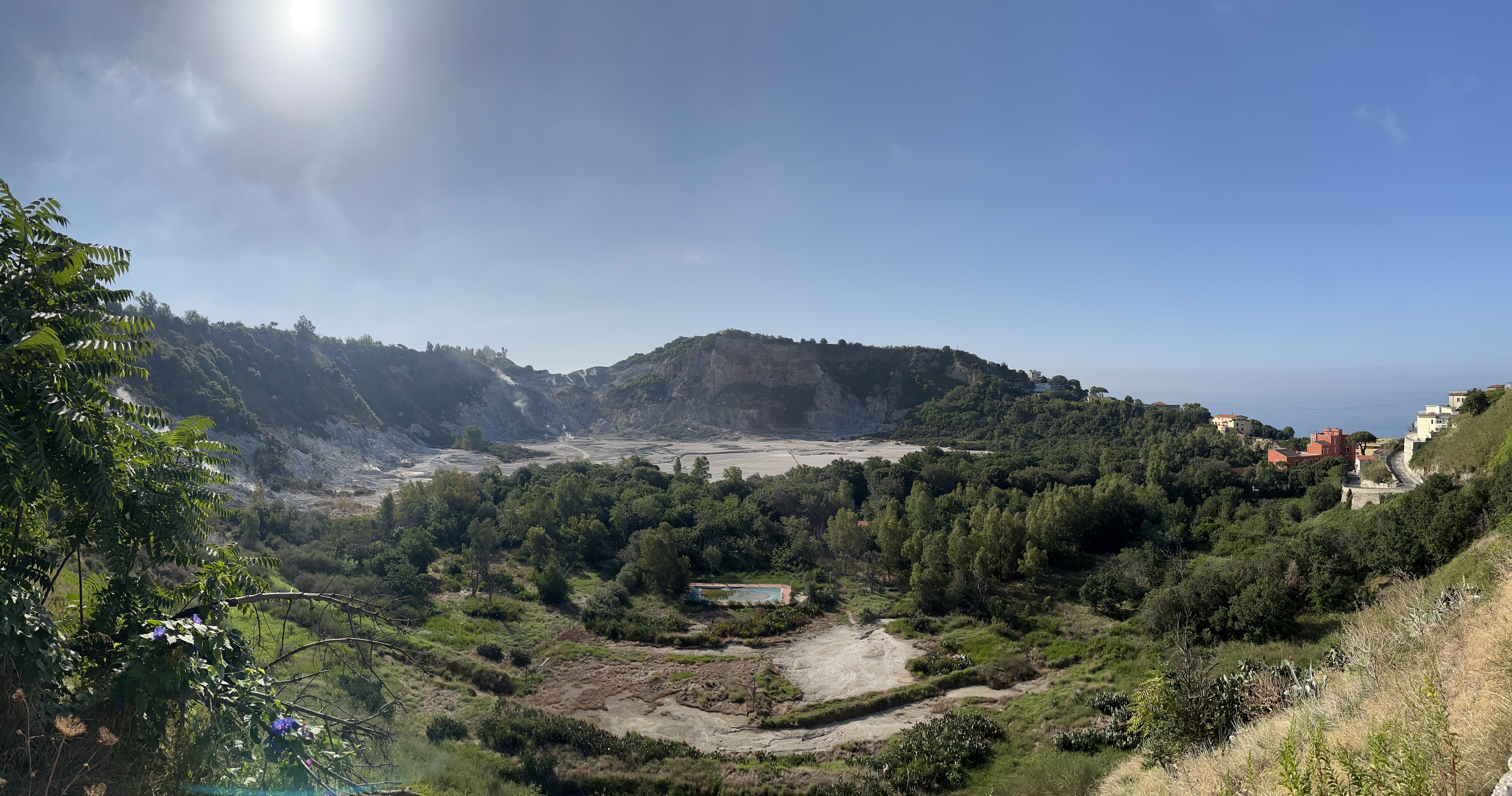
The Campi Flegrei is one giant smoldering super-volcano, with dozens of craters spread over about 200bsquare kilometers—much of that within Naples. In the nearby countrysides craters that look like large mining pits, emit fumaroles with potent-smelling sulfurous gas.
Talk about volcanic terroir!
“This is not like Etna where you look up and see the volcano. Here you live in the volcano,” declares Gerardo Vernazzaro, the 46-year-old winemaker at his family’s Cantine Degli Astroni, named after a spent crater—now covered in forest and turned into a nature reserve—below its oldest vineyard.
Naturally, there is a kind of fatalism here. Predictions are that one day it will catastrophically all blow up again. The last big eruption here, nearly 500 years ago, created the 130-meter Monte Nuovo over one week. The once-chic Roman resort of Baiae, where Julius Caesar had a getaway, sunk into the sea following a seismic shift after the fall of the Empire.
Perhaps because the earth moves so much here, Campi Flegrei wines—principally the light Piedirosso reds and the local version of the white variety Falanghina—tend to be drunk quickly and locally.
“The wines here were born with the concept of carpe diem,” says Vernazzaro. “The idea is: Better an egg today than a hen tomorrow.”
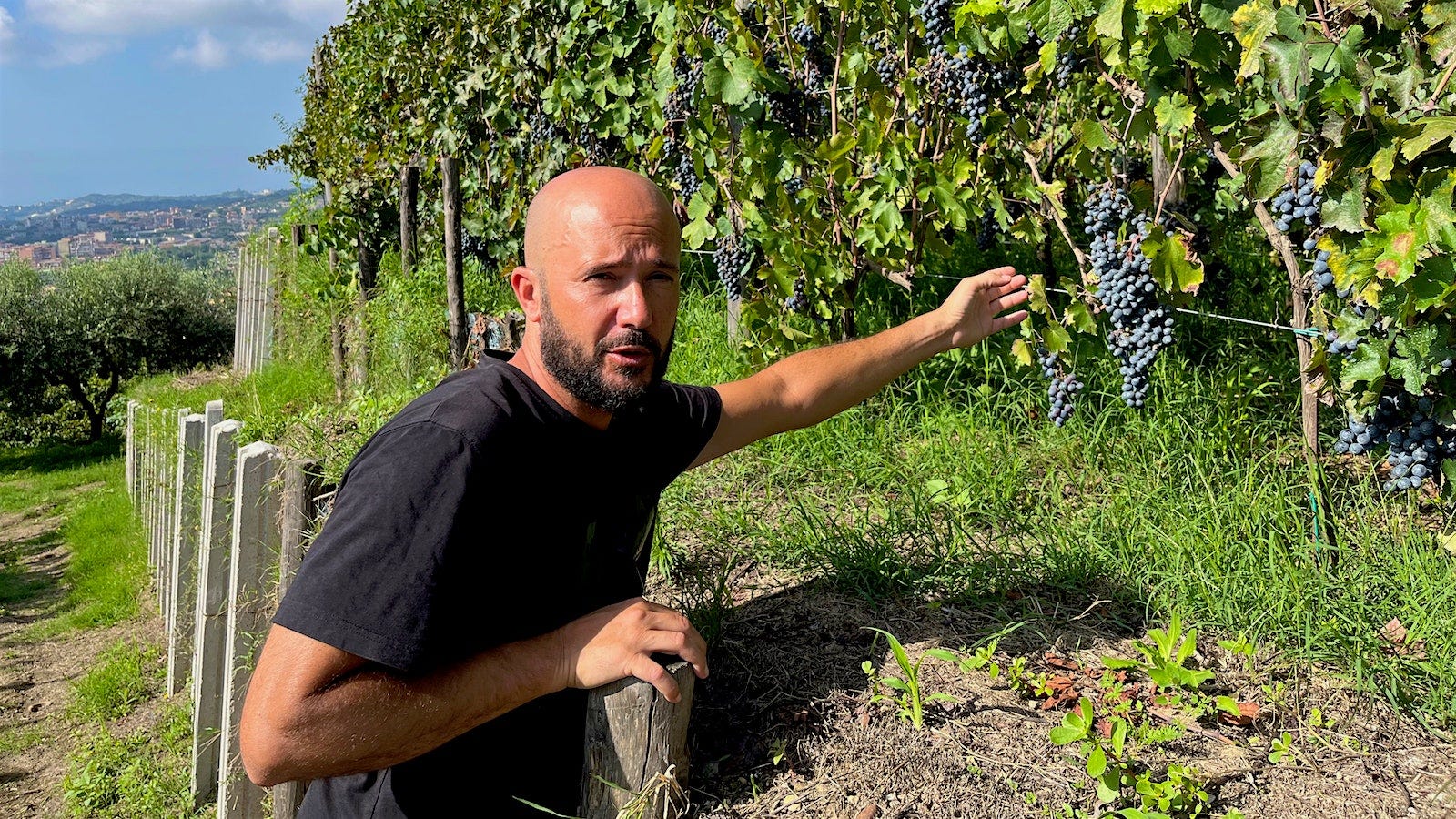
Piedirosso makes some of the most appealing, easy-drinking reds I know. Also known as Per’e Palummo, Piedirosso is grown throughout Campania, including on Ischia. Fresh, with low-to-moderate levels of alcohol (12 to 13.5 percent), the wines show red fruit and spice, becoming more savory and minerally as they evolve over time.
The image comes to mind of Beaujolais with a suntan.
“Piedirosso is like we Neapolitans,” Vernazzaro says. “It likes the heat and sun.”
Astroni is in its fourth generation of farming here. Starting with the 2000 vintage, when Gerardo was finishing enology school up north, the family created a commercial label to market their wine. Astroni’s Piedirosso Campi Flegrei bottlings come from the organically certified Camaldoli vineyard of volcanic sands and tuff stone: Colle Rotondella is fermented with native yeasts in stainless steel, and Tenuta Camaldoli is made from a selection of grapes, fermented in cherry wood vats and aged in chestnut barrels.
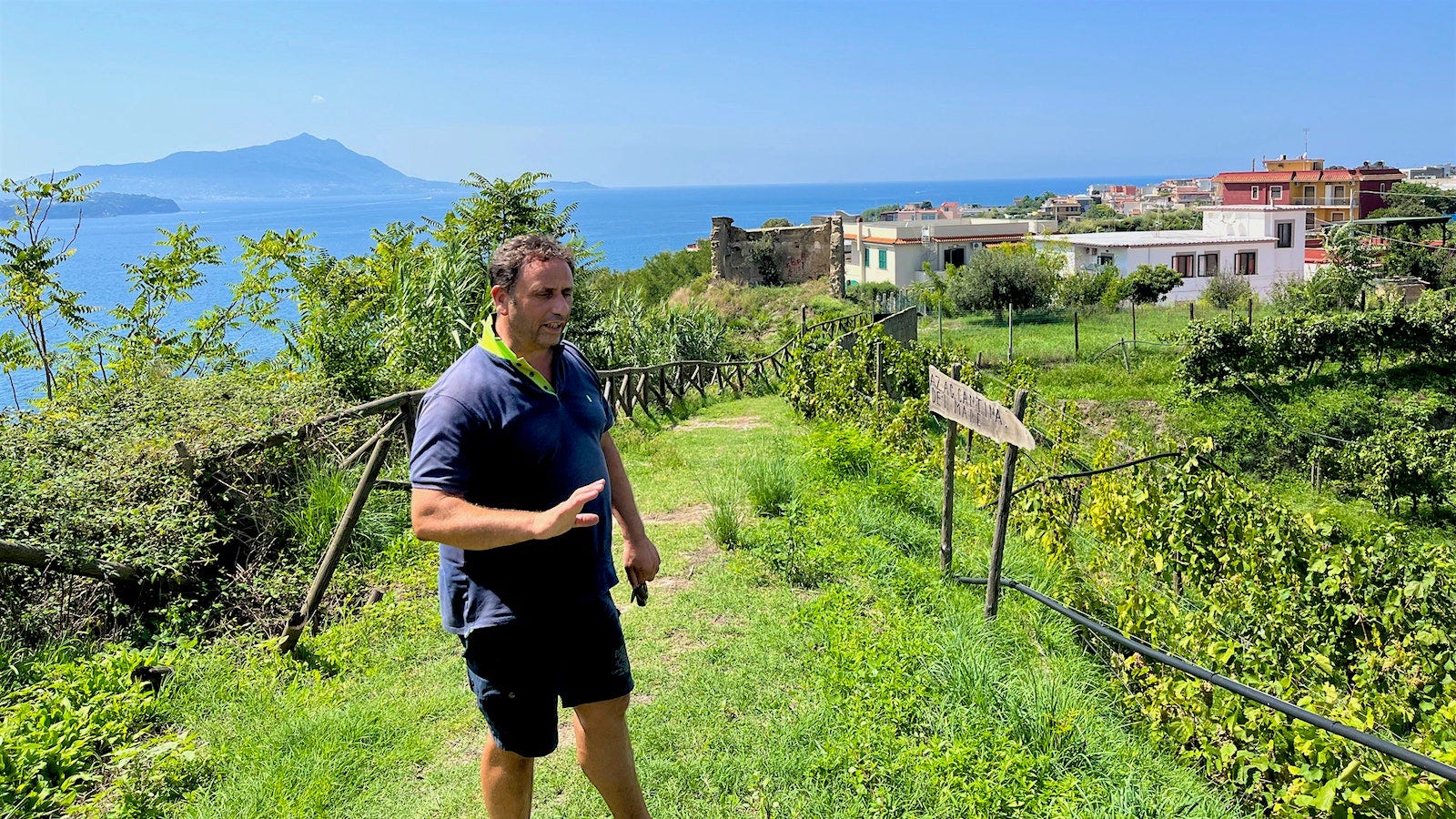
Some of my favorite Piedirossos from the zone are a pair of intense riservas by Cantina del Mare, produced under the family home of Gennaro Schiano.
Schiano, 50, is a self-taught, third-generation, small producer who launched his label with the 2003 vintage. All his vineyards—the most dramatic of which are just above the Mediterranean coast in volcanic pebbles and sand—are planted ungrafted, or without phylloxera-resistant rootstock. Both his Sorbo Rosso and his old-vine Terra del Padre bottlings are deeply nuanced and slightly rustic, with balsam and spice—defying Piedirosso’s fast-and-facile image.
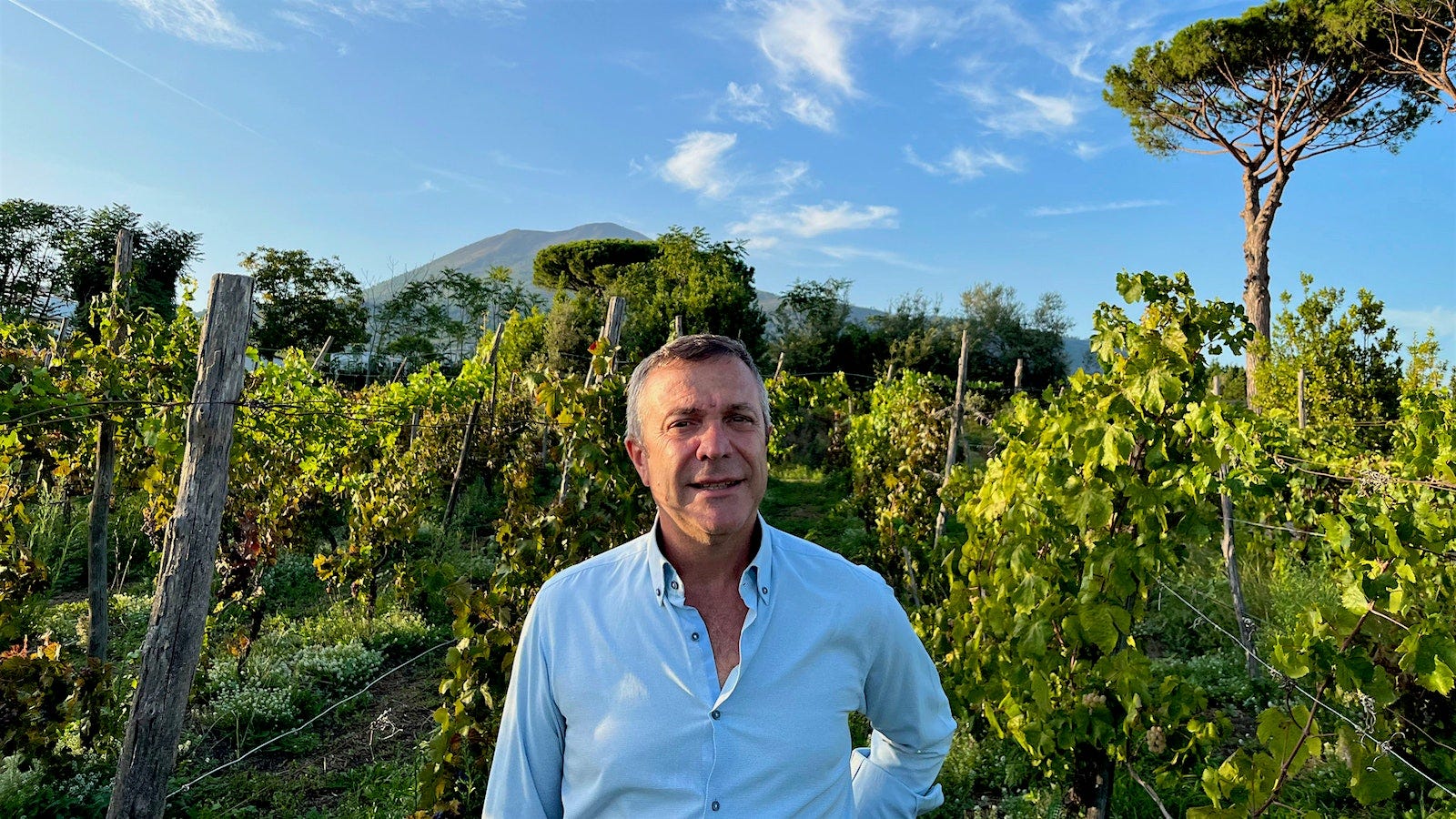
After most of a day in Campi Flegrei, I headed over to the southern slopes of Mount Vesuvius on the other side of Naples to meet, Massimo Setaro.
Setaro, 54, scion of the Setaro pasta-making family, launched his Casa Setaro winery in 2004, below his family home in Trecase, using vineyards owned by his parents. A telecommunications engineer, Setaro quit his post for more than a decade as he built his winery and replanted vineyards—all of which are ungrafted. Once Casa Setaro was established, he returned to his day job.
“I’m lucky that I don’t have to live off wine,” he says with a laugh.
Piedirosso from his vineyards, which are perched above Pompeii in volcanic pebble–laced soils, takes on slightly richer qualities. Vesuvius’ principal appellation is Lacryma Christi, its once-storied red and white wines are now often sold “not as wine but as gadgets to tourists,” Setaro laments.
Setaro has made some delicious progress here with a pair of varietal Piedirosso reds, as well as a Lacryma Christi del Vesuvio riserva called Don Vincenzo, which is blended with 30 percent of powerhouse Aglianico.
Setaro’s vision is to restore the bygone luster of Vesuvius and Lacryma Christi. “The idea is to do the same thing as on Etna,” he says, explaining his idea to show the expressions of terroir based on different types of volcanic soils and different altitudes.
So far, it’s been a lonely cause.
Vesuvius has been geologically sleeping since the last eruption in 1944. The same can be said for the respective wine scenes. With few producers based on Vesuvius, and little support structure, the region doesn’t have nearly the kind of wine scene that developed on Etna in the early 2000s.
“Etna went faster because it attracted investors and visionaries,” Setaro says. “Vesuvio remained contadiniwho are isolated with their little pieces of land.”
For his Lacryma Christa whites, Setaro has helped lead the revival of Vesuvius’ unique-in-Italy Caprettone, a vibrant white variety that was only identified in 2014. From the limited number of wines I’ve sampled, Caprettone wines are born fresh, citrusy and floral and develop herbal, honeyed and nut flavors with time.
“Caprettone has a complexity that today we are just beginning to understand,” says Setaro, who produces two still Caprettone varietal wines and was the first to produce a sparkling Metodo Classico Caprettone.
“I make wine for passion,” he says, “and not to abandon the work of my parents.”
Vesuvius, I think, needs at least 20 more vignaoili like him. That would make for a truly explosive scene.
Read more about Etna, Campania and the Southern Italian wine scene and characters in my book South of Somewhere: Wine, Food and the Soul of Italy.
Mille grazie for sharing so generously- will link with Nicola, back in his father’s Catania after birth and toddler years in Brooklyn. Visited in 2022 (all I’ve seen of La Bella- vergogna!) and he was too busy for the drive to Etna…<sigh>