

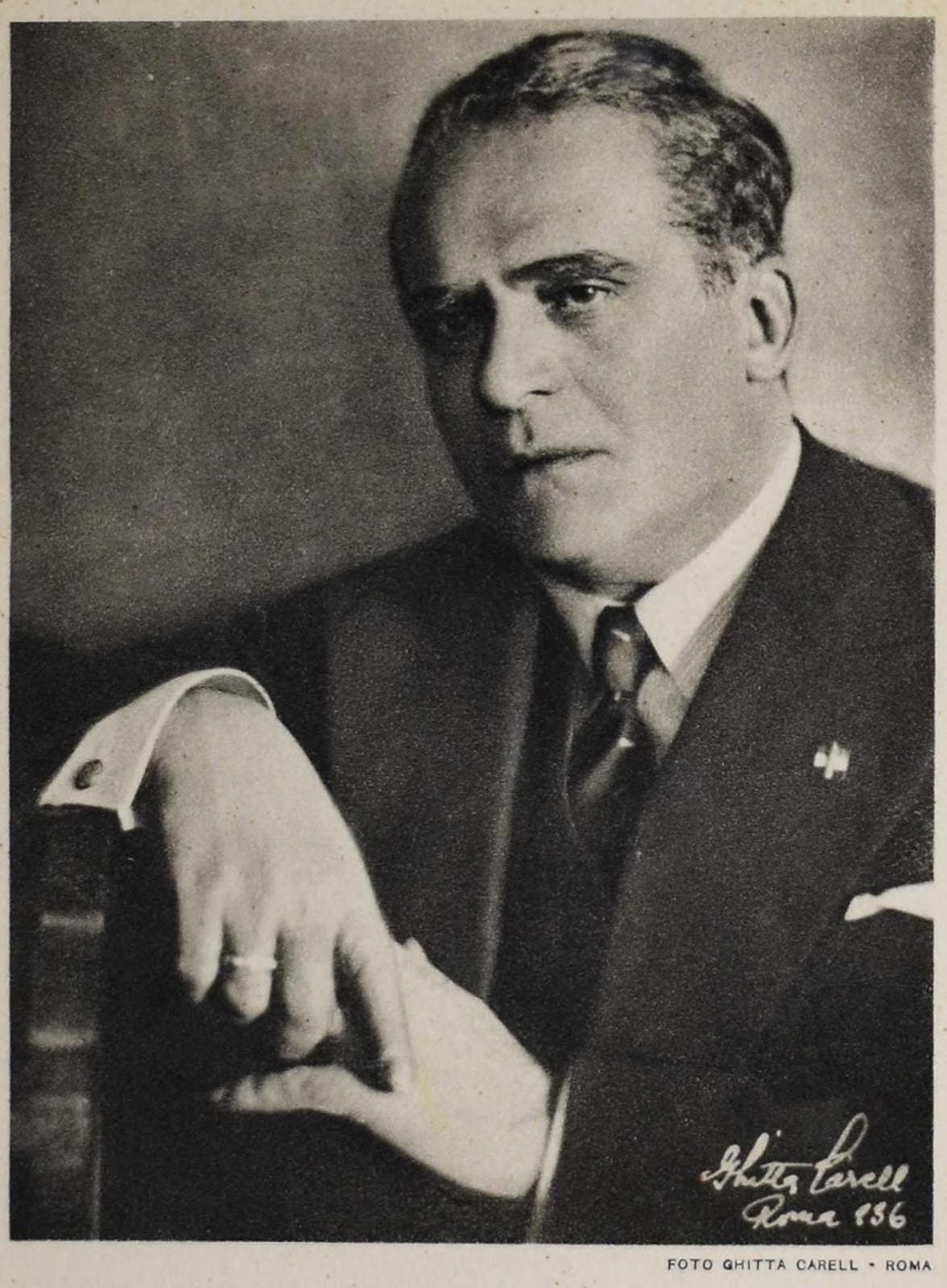
The most intriguing and contemporary wine book I’ve read in a long time was written by a Fascist.
I hate the way that sounds. I’ll explain: Umberto Notari was an Italian writer and publisher who, like many Futurists, aligned with Mussolini’s regime. Notari is also a foodie institution—the founder in 1929 (with his wife, Delia Pavoni) of Italy’s oldest, most beloved culinary magazine La Cucina Italiana.
He wrote L’Arte di Bere (The Art of Drinking) in 1933— a brilliantly witty work that influenced the 20th century’s renaissance of Italian wine. The book was reissued in its original Italian last year by Edizioni Ampelos (which published Altrove a Sud, a translation of my book South of Somewhere in 2022).
The amazing thing about L’Arte di Bere— and what makes it essential reading for vinophiles— is its resonance today amid a new wine crisis and debates about wine and health.
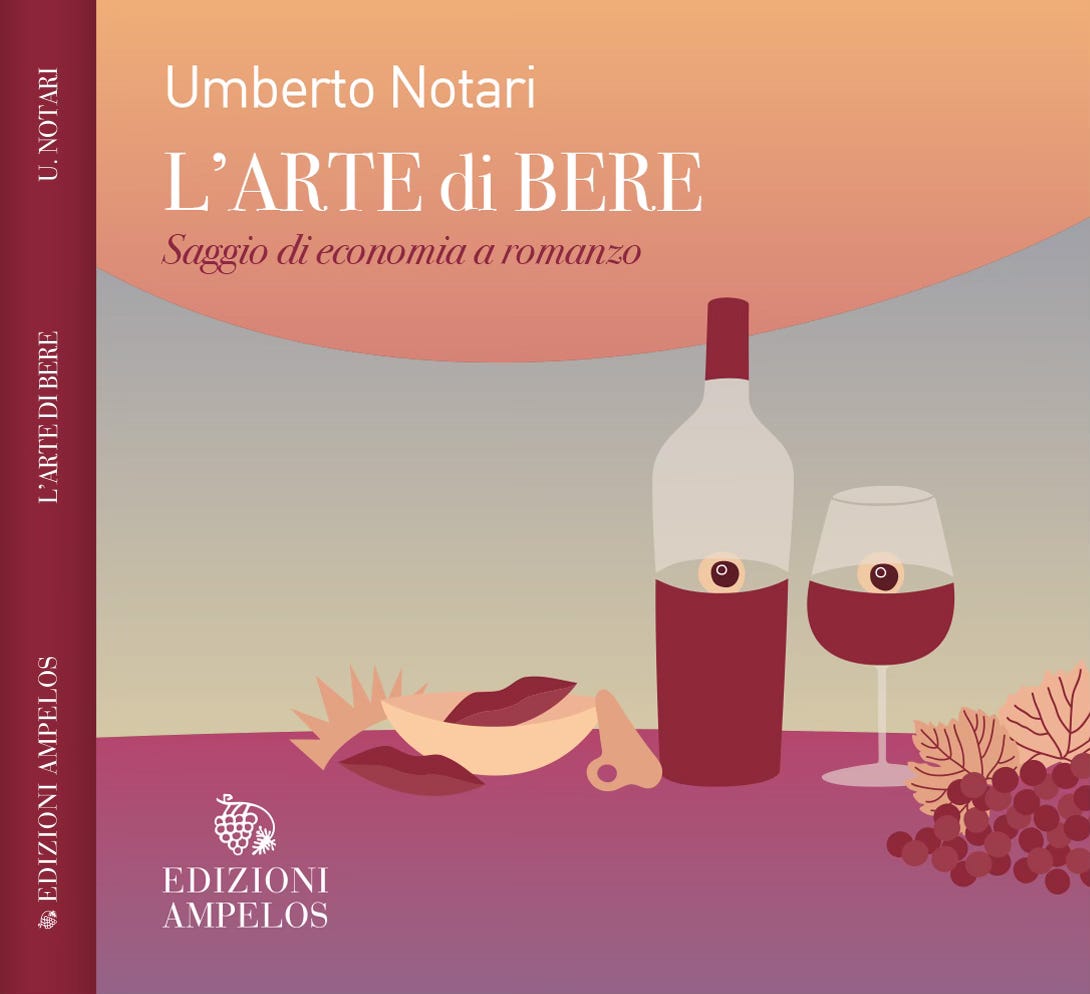
The book is structured as a sort of parlor novel with the characters— aristocrats and bourgeois swells— discussing wine and society at the villa of fictional protagonist Marquis Olinto Baglia. The marquis delineates a crisis in vino that sounds a lot like today: In the first decades of the 20th century a steep reduction in Italian wine particularly among the middle and upper classes was fuelled by competition, cocktails and prohibitionists.
“Instead of wine, the magnificent, healthy, and joyful wine, (modern) man now drinks other things: beer, coffee, tea, mineral water, liquors and other concoctions,” he laments.
The marquis advocates for the creation of a pantheon of great wines of place, moderate wine consumption as part of a healthy lifestyle and elevating wine through public education and higher-end wine bars.
“Those who cultivate vines elevate humanity,” proclaims one of the female guests. “A wine producer who relentlessly seeks to his improve his product is no longer an industrialist or a merchant: he becomes an educator.”
Could it be said any better?
Another younger woman says her female peers prefer cocktails to vino because “wine makes you fat.” A spirited debate ensues.
This was not an episode of “The View” but a peek into the drawing rooms of a changing world with an uncertain future. In that future—as it concerned wine and food— Notari had a lasting impact. He and his friend the enologist, agricultural minister and senator Arturo Marescalchi (to whom the book is dedicated) essentially laid the foundation for the Italian appellation system created after the fall of Fascism and World War II in the dolce vita Italy of 1963.
So how did wine become important to Fascism? And how did Fascism attract foodies like Notari?
It’s natural that Fascism is today an “F-word.” Whatever good it did for Italy—land reform for peasants, reducing infant mortality, draining the malaria-breeding swamps, building 20th century infrastructure, and fighting the Mafia—was drowned by a flood of evil: the cancelling of civil rights in a police state, antisemitic laws contributing to the Holocaust, a cult of violence and partnership with Nazi Germany.
But it didn’t all happen at once. Mussolini consolidated power by degrees in a Make-Italy-Great-Again kind of way after convincing the King that only he as prime minister could restore order and purge the socialist opposition (to which Mussolini once belonged). He coined the term Fascist after the Latin fasces—a bundle of sticks carried by Roman magistrates as a symbol of authority. The fasces—signifying strength in unity--paradoxically can be found all over the Lincoln Memorial (dedicated in 1922 before Mussolini’s march on Rome) and on other Washington momuments.
Notari’s embrace of Fascism—like that of many Futurists-- was no doubt fed by the movement’s anti-church stance and ideas about Italian identity in an industrial age. Before World War I Notari had published a brazen avantgarde anti-clerical magazine and wrote a scandalous novel about brothel life in Milan. From all appearances he seemed a liberal. Yet nationalism eventually got the better of him, and in the late 1930s he penned an essay on the theory of the Romans as an Aryan “white-Mediterranean” ideal.
As for Il Duce, wine was not a passion. A reported teetotaler, in the early 1920’s he shuttered thousands of taverns over concerns of alcoholism and unruliness.
The Italian Wine Lobby appealed to the regime with a new campaign for elevated “typical” local quality wines tied to Italian identity as a wholesome family-friendly beverage. Notari and Marescalchi were part of this movement – chronicled in UCLA Professor Brian J. Griffith’s 2020 article “Bacchus among the Blackshirts: Wine Making, Consumerism and Identity in Fascist Italy, 1919–1937”.
I'm sure that Notari, like Marescalchi, genuinely loved wine and saw it as an expression of culture for the future.
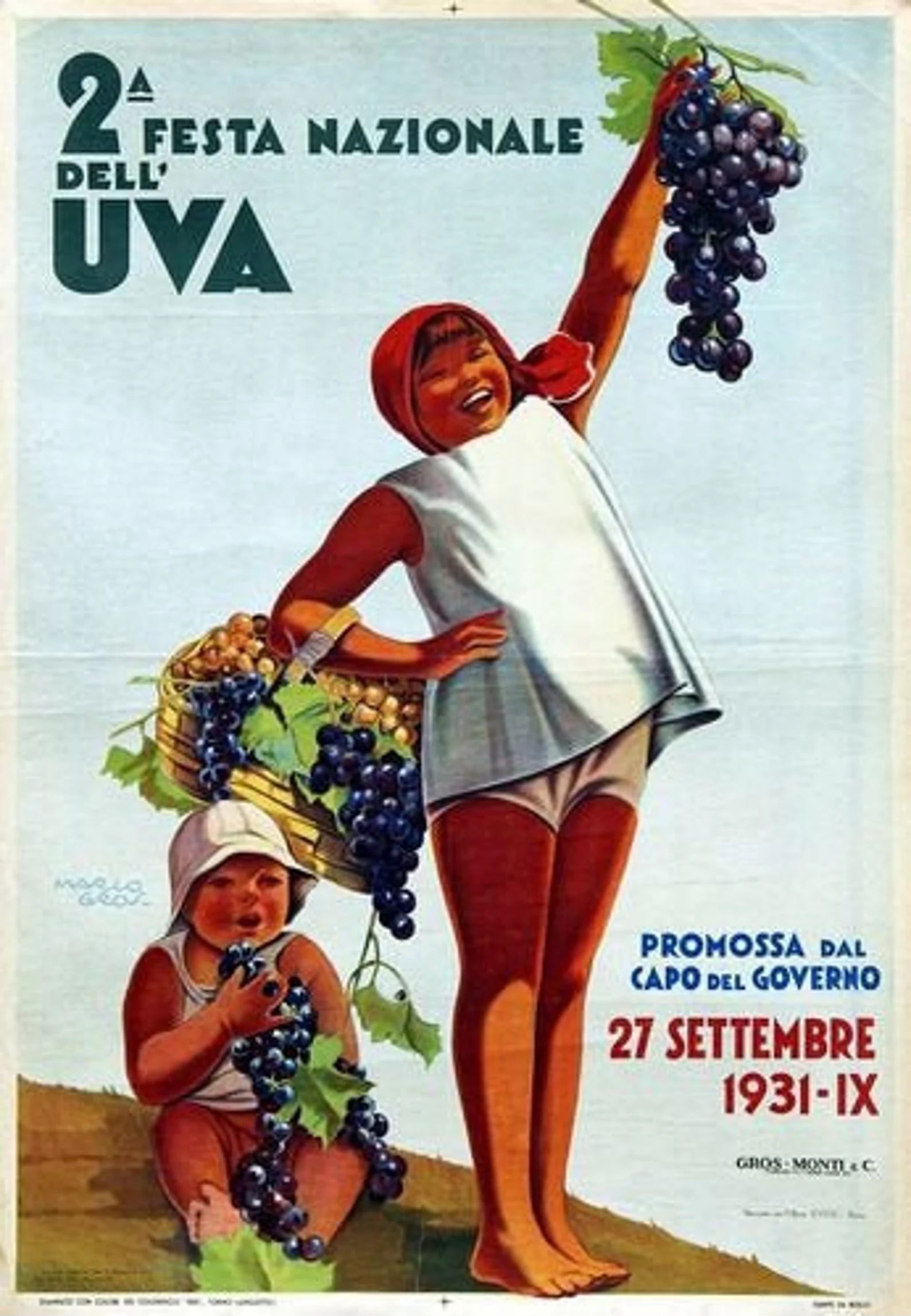
To Mussolini and his propagandists, vino was an opportunity. Wine was produced in all of Italy’s 20 disparate regions and could be used as a uniting national beverage. The regime joined with the wine lobby promoting national wine fairs and encouraging Italians to travel to discover regional wines and local gastronomy.
After Fascism’s fall and the end of the war, the wine renaissance continued— no longer a direct tool of the state. The mantle was picked up by local wine consortiums and celebrated humanists like the anti-Fascist “anarchist” editor Luigi Veronelli beginning in the 1950s and the Slowfood Movement born in the 1980s.
I’ve lived the last 25 years in France and Italy and I’ve spent a lot of time studying local wines and cuisines out of a driving curiosity, the joy of discovery and a love of history. All of it to me is an antidote to a numbingly homogenous modern world.
In Italy in particular, I’ve found a lot of quirk and soul in local dishes and wines from beautiful places with pasts full of suffering and tears—making them all the more relevant as we lean into another century we don’t yet understand.
Such an unexpected angle.. It’s exactly the kind of reminder that with Italian wine you never stop discovering something new.. A bold headline is absolutely worth it.. and yet we’re moving in cycles again, debating whether wine is fading or cocktails are cooler — feels very modern and surprisingly relevant..
Very interesting indeed. A historical and really engaging framework that compares and mirrors two epochs in which critical affinities emerge.